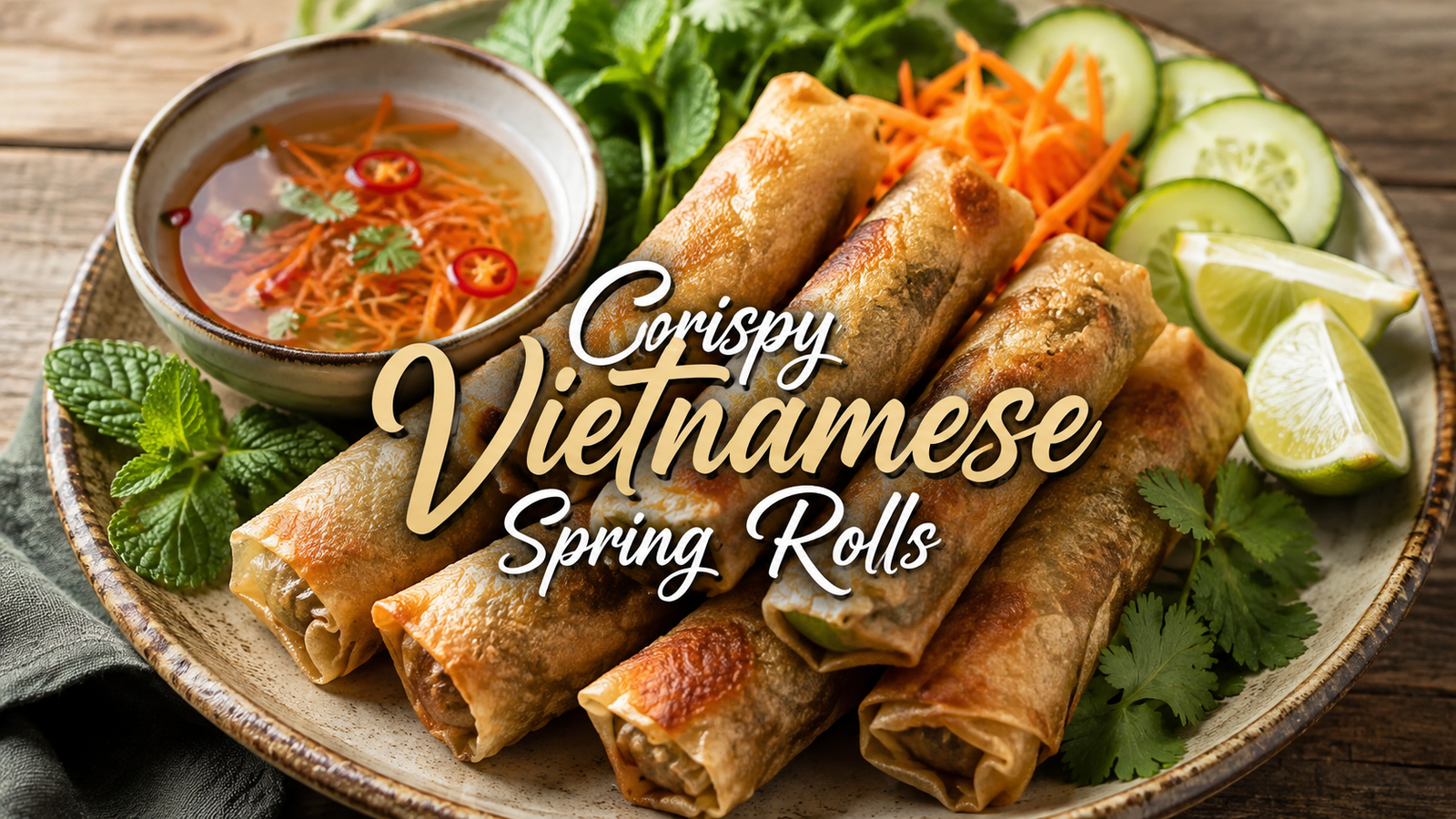
Golden, crunchy, and packed with a savory vegetable filling, Crispy Vietnamese Spring Rolls are a delicious homemade snack that feels special without being difficult to make.
Each roll has a crisp, delicate exterior and a flavorful filling of cabbage, carrots, mushrooms, and noodles. A quick sweet-and-tangy dipping sauce adds a fresh finishing touch.
This recipe is designed for beginners and busy home cooks. The filling comes together in one pan, the rolls are easy to shape, and they can be fried immediately or frozen for later.
Serve these crispy spring rolls as an appetizer, snack, or light meal alongside fresh herbs, cucumber, and a simple dipping sauce. The combination of crunchy texture and rich, savory flavor makes them hard to resist.
Ingredients
For the Spring Rolls
- 20 spring roll wrappers, thawed if frozen
- 100 g rice vermicelli noodles
- 150 g finely shredded green cabbage
- 100 g carrot, julienned or grated
- 100 g mushrooms, finely chopped
- 2 green onions, finely sliced
- 2 cloves garlic, finely minced
- 1 tablespoon soy sauce
- 1 teaspoon sesame oil
- 1/2 teaspoon white pepper
- 1/2 teaspoon salt
- 1 teaspoon sugar
- 1 tablespoon cooking oil, for the filling
- 1 tablespoon cornstarch
- 2 tablespoons water
- 1 egg, beaten, for sealing the wrappers
For Frying
- 750 ml neutral cooking oil, such as sunflower or vegetable oil
For the Dipping Sauce
- 3 tablespoons water
- 2 tablespoons sugar
- 2 tablespoons fresh lime juice
- 1 tablespoon soy sauce
- 1 small garlic clove, finely minced
- 1 small red chili, finely sliced, optional
- 1 tablespoon finely grated carrot, optional
Tools Needed
- Large frying pan or wok
- Large bowl
- Small bowl
- Cutting board and knife
- Tongs
- Slotted spoon
- Wire rack
- Paper towels
- Deep, heavy saucepan or deep fryer
- Instant-read thermometer, optional
Step-by-Step Instructions
1. Prepare the noodles
Place the rice vermicelli noodles in a bowl and cover with warm water.
Soak according to the package directions until softened. Drain thoroughly and cut the noodles into short pieces with kitchen scissors.
Avoid leaving excess water in the noodles. A dry filling helps the spring rolls stay crisp.
2. Make the filling
Heat 1 tablespoon of cooking oil in a large pan over medium-high heat.
Add the garlic and cook for about 20 seconds until fragrant. Add the cabbage, carrot, mushrooms, and green onions.
Stir-fry for 3 to 4 minutes. The vegetables should soften slightly while still retaining some texture.
3. Season the vegetables
Add the chopped rice noodles, soy sauce, sesame oil, white pepper, salt, and sugar.
Stir everything together for 1 to 2 minutes until evenly coated.
Taste the filling and adjust the seasoning if needed. The mixture should be savory and flavorful but not wet.
4. Thicken the filling
Mix 1 tablespoon of cornstarch with 2 tablespoons of water in a small bowl.
Pour the mixture into the pan and stir continuously for about 30 seconds. The filling should become slightly sticky and hold together.
Remove the pan from the heat.
5. Cool the filling
Transfer the filling to a wide plate or shallow bowl.
Spread it out so steam can escape. Let it cool completely before rolling.
Warm filling can make the wrappers soft and difficult to handle, so this step is important.
6. Prepare the wrappers
Place one spring roll wrapper on a clean work surface with one corner pointing toward you.
Keep the remaining wrappers covered with a slightly damp kitchen towel so they do not dry out.
7. Fill each wrapper
Place about 2 tablespoons of the cooled filling near the lower third of the wrapper.
Do not overfill the roll. Too much filling can make it difficult to seal and may cause the wrapper to split during frying.

8. Roll the spring rolls
Fold the bottom corner over the filling.
Fold the left and right corners toward the center. Roll the spring roll upward firmly but gently.
Brush the top corner with a little beaten egg, then finish rolling to seal.
Repeat with the remaining wrappers and filling.
9. Heat the oil
Pour the oil into a deep saucepan or use a deep fryer.
Heat the oil to 175°C (350°F). If there is no thermometer, test with a small piece of wrapper. It should bubble steadily and rise to the surface without immediately turning dark.
Do not overcrowd the pan because too many spring rolls can lower the oil temperature.
10. Fry until golden and crispy
Carefully place a few spring rolls into the hot oil.
Fry for about 3 to 5 minutes, turning occasionally, until the wrappers are golden brown and beautifully crisp.
Keep the oil temperature as steady as possible for an even, crunchy exterior.
11. Drain properly
Remove the spring rolls with tongs or a slotted spoon.
Place them on a wire rack set over a tray. A wire rack allows excess oil to drain while keeping the bottoms crisp.
If a wire rack is unavailable, use a plate lined with paper towels.
12. Make the dipping sauce
Add the water and sugar to a small bowl.
Stir until the sugar dissolves. Add the lime juice, soy sauce, garlic, and optional chili and grated carrot.
Taste and adjust with a little more lime juice or sugar if desired.
13. Serve
Allow the spring rolls to cool for a few minutes before serving.
Serve them warm with the dipping sauce. Fresh cucumber, lettuce, cilantro, or mint can be added on the side for a refreshing contrast.
Tips & Variations
Keep the filling dry
Moisture is one of the biggest enemies of crispy spring rolls.
Cook the vegetables until excess moisture has evaporated, and drain the noodles thoroughly before adding them to the pan.
Cool the filling completely
Never roll the filling while it is steaming hot.
A completely cooled filling is easier to handle and reduces the chance of soft or torn wrappers.
Avoid overfilling
A smaller amount of filling produces a neater spring roll with a better crunch.
About 2 tablespoons per wrapper is enough for a medium-sized roll.
Roll firmly
The spring roll should be snug but not squeezed tightly.
A loose roll can absorb too much oil, while an overly tight roll may burst when the filling expands during cooking.
Keep wrappers covered
Spring roll wrappers dry out quickly once exposed to air.
Keep unused wrappers under a slightly damp, clean kitchen towel while assembling the rolls.
Fry in small batches
Crowding the pan causes the oil temperature to drop.
Fry several rolls at a time with enough room for them to move freely. This helps create an evenly golden, crispy shell.
Use a wire rack
Placing freshly fried spring rolls directly on a flat plate can trap steam underneath.
A wire rack keeps air moving around the rolls and helps preserve their crunchy texture.
Easy vegetable swaps
The cabbage can be replaced with finely shredded napa cabbage.
Bean sprouts, finely chopped bell pepper, or shredded zucchini can also be added, but vegetables with high water content should be cooked until their moisture has evaporated.
Add protein
For a heartier version, add 150 g of finely minced halal chicken or turkey.
Cook the meat completely before adding the vegetables. Ground shrimp can also be used if seafood is preferred.
Make them vegetarian
The basic recipe is vegetarian as long as the spring roll wrappers and soy sauce used are suitable for a vegetarian diet.
For a vegan version, replace the beaten egg used for sealing with a thick paste made from 1 tablespoon flour and 1 tablespoon water.
Air-fryer variation
For a lighter option, lightly brush the assembled spring rolls with cooking oil.
Air-fry at about 200°C (400°F) until golden and crisp, turning halfway through. Cooking times vary between air fryers, so begin checking after about 10 minutes.
The texture will be crisp but slightly different from deep-fried rolls.
Common mistakes to avoid
Wet filling: This can make the wrappers soggy and cause them to tear.
Oil that is too cool: The rolls may absorb excess oil instead of becoming crisp.
Oil that is too hot: The outside can brown before the wrapper becomes properly crisp.
Overcrowding: Too many rolls at once can reduce the oil temperature.
Loose rolling: Gaps allow oil to enter and can cause the filling to spill out.
Storage & Serving
Freshly fried spring rolls are best served immediately while the wrappers are hot and crunchy.
For leftovers, allow the rolls to cool completely before placing them in an airtight container. Refrigerate for up to 3 days.
To reheat, use an air fryer or oven rather than a microwave. Heat at around 190°C (375°F) until hot and crisp again.
For longer storage, uncooked spring rolls can be frozen. Place them in a single layer on a parchment-lined tray and freeze until firm.
Transfer the frozen rolls to a freezer-safe container or bag. They can be stored for up to 2 months for the best quality.
Frozen spring rolls can usually be fried directly from frozen. Add extra cooking time and fry carefully because frozen rolls can cause the oil to bubble more vigorously.
For serving, pair the rolls with the sweet-and-tangy dipping sauce, fresh lettuce, cucumber slices, mint, or cilantro.
Frequently Asked Questions
Are Vietnamese spring rolls fried or fresh?
Vietnamese cuisine includes both fresh and fried spring-roll styles. This recipe is for the crispy fried version, which has a golden wrapper and savory cooked filling.
What type of wrapper is best for crispy spring rolls?
Thin spring roll wrappers designed for frying work best. They become delicate and crunchy when cooked in properly heated oil.
Can rice paper be used instead?
Rice paper can be used, but it behaves differently from traditional wheat-based spring roll wrappers. It can become very crisp when fried, but it requires careful handling and proper soaking.
Why did the spring rolls turn out soggy?
Soggy rolls are often caused by wet filling, oil that is not hot enough, or overcrowding the pan.
Allowing the filling to cool and cooking the rolls in batches usually gives better results.
Can the filling be prepared ahead of time?
Yes. The filling can be cooked up to 1 day ahead and stored in the refrigerator.
Cool it completely before covering and refrigerating. Bring it out when ready to assemble the rolls.
Can these spring rolls be made without mushrooms?
Yes. Simply replace the mushrooms with extra cabbage, finely chopped bell pepper, or bean sprouts.
The vegetables should still be cooked until excess moisture has evaporated.
Can spring rolls be frozen before frying?
Yes. Freezing the uncooked rolls is a convenient option for meal prep.
Freeze them in a single layer first so they do not stick together, then transfer them to a freezer-safe container.
What is the best oil for frying spring rolls?
A neutral oil with a high smoke point works well. Sunflower, vegetable, or canola oil are suitable choices.
How do you stop spring rolls from opening while frying?
Seal the final corner firmly with beaten egg or a flour-and-water paste.
Avoid overfilling and make sure the roll is snug before sealing.
Can these spring rolls be made halal?
Yes. The recipe contains no alcohol or pork. For a halal-friendly version, check that packaged wrappers, soy sauce, and any optional protein are halal-certified or otherwise suitable for the intended diet.
Can these spring rolls be made without egg?
Yes. Use a thick flour-and-water paste to seal the wrappers.
Mix 1 tablespoon flour with 1 tablespoon water and apply a thin layer to the final wrapper corner.
Conclusion
Crispy, golden, and packed with a savory vegetable filling, these Crispy Vietnamese Spring Rolls are an easy homemade treat for beginners and experienced cooks alike.
The simple filling, delicate wrapper, and bright dipping sauce create a satisfying mix of crunchy, savory, tangy, and fresh flavors.
Prepare a batch for a family snack, weekend gathering, or easy appetizer. With a few simple techniques, homemade spring rolls can come out beautifully crisp every time.
Serve them hot, add plenty of dipping sauce, and enjoy the irresistible crunch.