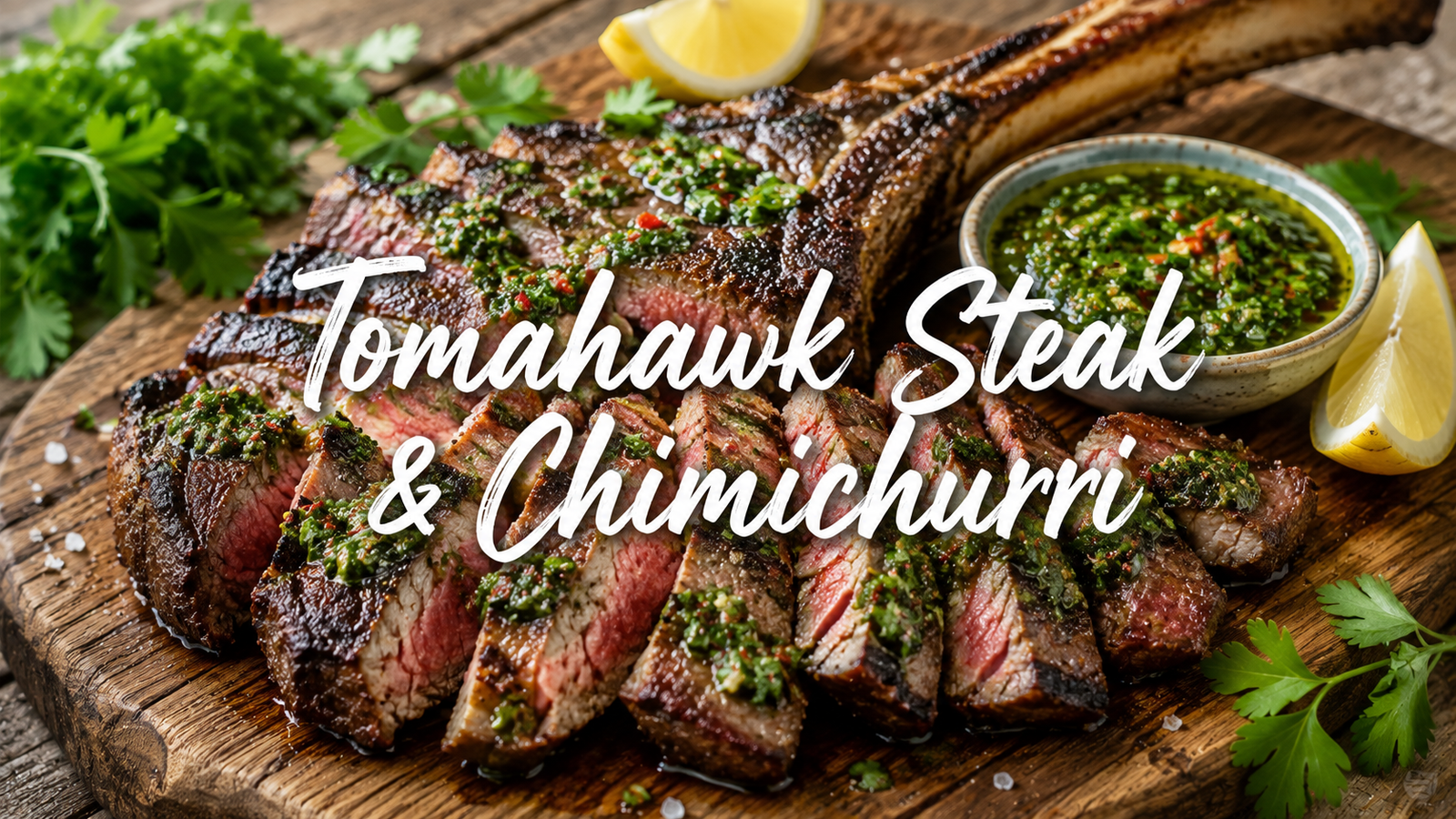
A thick, juicy steak with a deeply browned crust and a spoonful of fresh, zesty chimichurri is hard to beat. This Tomahawk Steak & Chimichurri recipe brings steakhouse-style flavor to the home kitchen without complicated techniques.
Tomahawk steak is a large, bone-in ribeye known for its impressive presentation, rich marbling, and tender texture. The long bone gives the steak its signature appearance, while the thick cut makes it ideal for slow cooking followed by a quick, high-heat sear.
The bright chimichurri sauce is the perfect partner. Fresh parsley, cilantro, garlic, lemon juice, and olive oil create a vibrant sauce that cuts through the richness of the beef.
The result is tender, juicy steak with a smoky, savory crust and a fresh, tangy finish. It is impressive enough for a special dinner but simple enough for a confident beginner to prepare.
Ingredients
For the Tomahawk Steak
- 1 halal tomahawk ribeye steak, about 2½-3 inches thick and 2½-3 pounds
- 2 teaspoons kosher salt
- 1 teaspoon freshly ground black pepper
- 1 tablespoon olive oil
- 4 garlic cloves, lightly crushed
- 2 fresh rosemary sprigs
- 2 fresh thyme sprigs
For the Chimichurri
- ½ cup finely chopped fresh parsley
- ¼ cup finely chopped fresh cilantro
- 3 garlic cloves, finely minced
- ⅓ cup extra-virgin olive oil
- 2 tablespoons fresh lemon juice
- 1 tablespoon finely chopped red onion
- ½ teaspoon dried oregano
- ¼ teaspoon red pepper flakes
- ¼ teaspoon salt
- ⅛ teaspoon black pepper
For Serving
- Extra chimichurri, as needed
- Lemon wedges, optional
- Fresh parsley, optional garnish
Tools Needed
- Heavy oven-safe skillet or cast-iron skillet
- Instant-read meat thermometer
- Tongs
- Cutting board
- Sharp knife
- Small mixing bowl
- Spoon
- Paper towels
- Aluminum foil
Step-by-Step Instructions
1. Prepare the Steak
Take the tomahawk steak from the refrigerator about 30-45 minutes before cooking.
Pat the entire steak dry with paper towels. Removing surface moisture helps the outside develop a darker, richer crust.
2. Season Generously
Season both sides and the edges of the steak evenly with kosher salt and black pepper.
Press the seasoning gently into the meat. Because a tomahawk steak is very thick, enough seasoning is needed to flavor the entire cut.
3. Make the Chimichurri
Add the chopped parsley, cilantro, garlic, red onion, oregano, red pepper flakes, salt, and black pepper to a bowl.
Pour in the olive oil and fresh lemon juice. Stir everything together until well combined.
Let the sauce sit at room temperature while the steak cooks. This gives the herbs and garlic time to release their flavors into the oil.
4. Preheat the Oven
Preheat the oven to 250°F (120°C).
Place a heavy oven-safe skillet inside the oven while it preheats if the skillet is suitable for doing so. A hot cooking surface helps the steak begin developing a good crust later.
5. Cook the Steak Slowly
Place the seasoned steak on a rack set over a baking sheet.
Transfer it to the oven and cook until the center reaches approximately 115-120°F (46-49°C) for a final medium-rare result.
The exact cooking time depends heavily on the steak’s thickness and starting temperature, so a meat thermometer is much more reliable than a timer.
For a 2½-3-inch steak, the slow-cooking stage may take roughly 45-75 minutes.

6. Heat the Skillet
When the steak is close to the target temperature, carefully remove the skillet from the oven.
Place it over high heat and add the olive oil.
Allow the pan to become very hot before searing. A properly heated skillet helps create the dark, savory crust that makes a tomahawk steak so appealing.
7. Sear the Steak
Carefully place the steak in the hot skillet.
Sear for about 60-90 seconds per side, turning as needed until a deep golden-brown crust forms.
Use tongs to sear the fat edge and other thick sides for about 30-45 seconds each.
8. Add the Aromatics
Reduce the heat slightly and add the crushed garlic, rosemary, and thyme to the skillet.
Turn the steak briefly through the fragrant oil and herbs. This adds a warm, savory aroma without overpowering the beef.
Continue cooking until the steak reaches the desired final internal temperature.
For medium-rare, aim for approximately 130-135°F (54-57°C) after resting.
9. Rest the Steak
Transfer the steak to a cutting board.
Loosely cover it with foil and let it rest for 10-15 minutes.
Resting gives the juices time to redistribute, helping the slices stay moist and tender instead of losing flavorful juices onto the cutting board.
10. Slice and Serve
Cut the meat away from the bone, then slice the steak against the grain into thick pieces.
Arrange the slices around the bone for an impressive presentation.
Spoon fresh chimichurri over the steak or serve it on the side. Add lemon wedges and fresh parsley if desired.
Tomahawk Steak & Chimichurri Tips & Variations
Choose a Thick Steak
A thick tomahawk steak works especially well with the slow-roast and sear method.
Look for a cut with generous marbling throughout the ribeye portion. Fine streaks of fat help keep the meat rich and flavorful as it cooks.
Use a Meat Thermometer
Thickness makes cooking time difficult to predict.
A thermometer provides a much more accurate indication of doneness than minutes per pound or a fixed cooking time.
Insert the thermometer into the thickest part of the meat, avoiding the bone.
Dry the Surface Well
A dry steak develops a much better crust than a wet steak.
Before seasoning, pat the meat thoroughly with paper towels. Avoid adding extra moisture immediately before the steak hits the hot skillet.
Do Not Skip the Resting Time
Cutting immediately into a very hot steak can release a lot of its juices.
A short rest allows the juices to settle back into the meat, resulting in more succulent slices.
Give the Steak Space
If the steak is too large for the skillet, use a heavy griddle or another suitable cooking surface.
The meat should sit comfortably against the hot surface so the crust develops evenly.
Adjust the Chimichurri
The sauce is easy to customize.
For a sharper flavor, add another teaspoon of lemon juice. For a milder sauce, reduce the garlic slightly.
Extra parsley makes the sauce more herb-forward, while additional red pepper flakes bring more heat.
Try Lime Instead of Lemon
Fresh lime juice can replace the lemon juice in the chimichurri.
It gives the sauce a slightly different citrus flavor that works beautifully with grilled or seared beef.
Make It Herbier
Add a tablespoon of finely chopped fresh mint for a cooler, brighter variation.
Keep the mint subtle so it complements rather than dominates the parsley and cilantro.
Use a Grill
For a smoky grilled version, cook the steak over indirect heat until it reaches the desired pre-sear temperature.
Move it over direct high heat and sear both sides until a dark crust develops.
This method adds a delicious smoky character while keeping the center tender.
Avoid These Common Mistakes
Cooking by time alone: Every steak is different. Use internal temperature as the main guide.
Skipping the drying step: Excess moisture can make browning slower and less intense.
Using a cold pan: The skillet needs to be properly hot before searing.
Searing for too long: A tomahawk is already thick, but excessive high heat can overcook the outer layers.
Cutting immediately: Rest the steak before slicing for a juicier result.
Adding too much sauce: Chimichurri is bold. A few spoonfuls are enough to brighten the rich beef without hiding its natural flavor.
Storage & Serving
How to Store Leftover Steak
Allow leftover steak to cool slightly, then place it in an airtight container.
Refrigerate within 2 hours of cooking and use within 3-4 days.
Keep the chimichurri in a separate airtight container for the best texture and freshness.
How to Reheat Steak
For the most tender result, reheat leftover steak gently.
Place slices in a covered skillet with a small splash of water and warm them over low heat until heated through.
Avoid prolonged high heat because it can make the beef tough and dry.
Can Tomahawk Steak Be Frozen?
Yes. Wrap cooled leftover steak tightly and place it in a freezer-safe container or bag.
For the best quality, use frozen cooked steak within 2-3 months.
Thaw it in the refrigerator before reheating.
Chimichurri can also be frozen, although the fresh herbs may become slightly softer after thawing.

Serving Suggestions
Tomahawk steak is rich enough to be the star of the meal, so simple sides work beautifully.
Serve it with roasted potatoes, grilled vegetables, corn, steamed green beans, or a crisp salad.
Creamy mashed potatoes are another excellent pairing because their soft texture contrasts with the browned crust of the steak.
Frequently Asked Questions
1. What is a tomahawk steak?
A tomahawk steak is a bone-in ribeye steak with a long section of rib bone left attached.
It is essentially a thick ribeye presented with an extended bone, giving it its distinctive tomahawk shape.
2. Is tomahawk steak tender?
Yes. The ribeye portion is naturally tender and well marbled.
Proper cooking and resting are important for keeping the steak juicy and tender.
3. What is the best doneness for tomahawk steak?
Medium-rare is a popular choice because it keeps the center tender and juicy while allowing the exterior to develop a deeply browned crust.
The steak can also be cooked to medium or another preferred level using an internal thermometer.
4. Can a tomahawk steak be cooked without an oven?
Yes. It can be cooked entirely on a grill or heavy skillet.
For very thick steaks, indirect cooking followed by high-heat searing helps produce more even doneness.
5. Can dried herbs be used in chimichurri?
Fresh herbs provide the brightest flavor and best texture, so they are preferred.
If necessary, dried oregano can remain in the sauce, but fresh parsley and cilantro are recommended.
6. Can cilantro be left out?
Yes. If cilantro is not preferred, replace it with additional fresh parsley.
The resulting sauce will still be fresh, garlicky, tangy, and flavorful.
7. Why is chimichurri served with steak?
Chimichurri has a fresh, acidic, herb-filled flavor that balances the richness of beef.
Its bright taste adds contrast to the deeply savory steak without requiring a heavy cream-based sauce.
8. Can the chimichurri be made ahead?
Yes. Chimichurri can be prepared several hours ahead and kept covered in the refrigerator.
Allow it to come closer to room temperature before serving for a fuller flavor.
9. How long should tomahawk steak rest?
A thick steak generally benefits from about 10-15 minutes of resting after cooking.
The resting period helps the meat retain more of its flavorful juices when sliced.
10. What can be used instead of a cast-iron skillet?
A heavy oven-safe stainless-steel skillet or another sturdy oven-safe pan can work well.
The key is using a pan that can handle high heat and maintain a strong searing temperature.
Conclusion
A thick, juicy ribeye, a beautifully browned crust, and bright homemade chimichurri make this Tomahawk Steak & Chimichurri recipe an impressive but surprisingly manageable dinner.
The slow cooking method helps create an evenly cooked center, while the final high-heat sear delivers that rich, savory crust. Fresh herbs, garlic, olive oil, and lemon then add a vibrant finish to every tender bite.
Serve it with simple roasted potatoes, vegetables, or a crisp salad for a memorable meal that feels special without complicated preparation.
With a good-quality halal tomahawk steak, a reliable meat thermometer, and a little patience, this recipe makes steakhouse-style flavor achievable right at home. Give Tomahawk Steak & Chimichurri a try and share it with family or guests at the next special dinner.